New Mushroom Species Discovered in Sri Lanka: Significant Findings by Dr. Aseni Navoda Ediriweera and Research Team
- Features, News by country, Top News
- May 27, 2023


On May 22, 2023, a significant event took place in Taipei as the inaugural U.S.-Taiwan Science and Technology Cooperation Dialogue (STC-D) was held. This strategic dialogue brought together representatives from various government agencies in Taiwan and the United States to reinforce cooperation and understanding in the field of science and technology (S&T). The STC-D is
READ MORE
Research shows that warmer rivers significantly influence the abundance of Japanese eel populations in northern habitats.
READ MORE
A breakthrough in quantum technology reveals how superradiance can enhance signal stability in Asia’s burgeoning tech landscape.
READ MOREAn 11-year-old girl undergoes a historic dual organ transplant, marking a new milestone in pediatric surgery.
READ MORE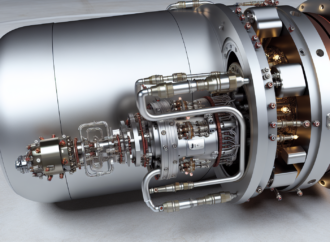
The Fusion Propulsion System represents a revolutionary advancement in space travel, promising to transform humanity’s ability to explore the cosmos. This innovative technology aims to harness the same nuclear fusion reactions that power the sun, enabling spacecraft to reach remarkable speeds and significantly reducing travel times to distant destinations. For instance, a mission to Mars could potentially be completed in weeks rather than months, vastly improving the feasibility of interplanetary exploration.
The core mechanism of the Fusion Propulsion System involves the fusion of light atomic nuclei, which releases immense energy. This process distinguishes it from traditional chemical rockets, offering a cleaner and more efficient means of propulsion. Central to the system’s operation is the creation and control of plasma, which is directed to produce thrust, propelling spacecraft at unprecedented velocities.
The implications of this technology extend far beyond mere speed; it could unlock the mysteries of our solar system and facilitate deeper space exploration. The Fusion Propulsion System is not merely a theoretical concept but a glimpse into a future where human ingenuity and advanced science converge to make the exploration of the stars a tangible reality. As we stand on the brink of this potential leap into the unknown, the call of the stars beckons humanity to embrace this next frontier in space travel.
READ MORE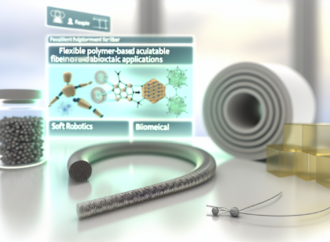
A team of researchers led by Dr. Yuanyuan Guo at Tohoku University’s Frontier Research Institute for Interdisciplinary Sciences (FRIS) has developed a flexible polymer-based actuatable fiber that can be integrated with smart materials and biosensing composite materials. The fiber, produced using the preform-to-fiber thermal drawing process, can be used for closed-loop control in high-precision operations,
READ MOREMaecenas mauris elementum, est morbi interdum cursus at elite imperdiet libero. Proin odios dapibus integer an nulla augue pharetra cursus.
Address
Rajamahavihara Mawatha,
Maharagama 10280, Sri Lanka
Phone: +94 716855379
Fax: 1-800-64-39