India’s Startup Ecosystem Faces Shift as Funding Drops to $11B in 20250
- Features
- February 26, 2026
India’s startup landscape sees a significant funding decline, with investors prioritizing quality over quantity in 2025.
READ MORE

India’s startup landscape sees a significant funding decline, with investors prioritizing quality over quantity in 2025.
READ MORE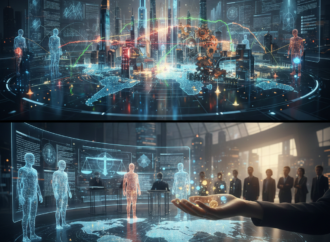
The year 2026 marks the rise of Agentic AI, with digital platforms like Moltbook hosting millions of autonomous AI agents engaging in complex tasks. This shift signifies a profound change in human interaction with intelligence, promising hyper-personalized services and autonomous enterprises. AI agents will manage personal tasks, drive economic activities, and accelerate scientific discoveries, potentially creating new markets and economic growth. However, this evolution poses ethical challenges, such as ensuring AI aligns with human values, maintaining transparency, and addressing bias. Legal frameworks must evolve to address issues of liability, data privacy, and decision-making autonomy. Science communicators play a crucial role in bridging the knowledge gap, fostering critical thinking, and shaping public perception, advocating for ethical AI development and governance. The agentic horizon offers unprecedented innovation, but its success depends on our ethical foresight and responsible stewardship as AI becomes integral to society.
READ MORE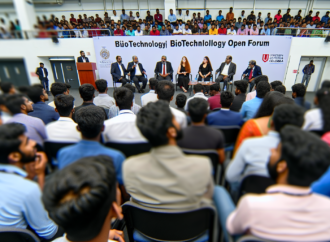
The Center for Transdisciplinary Biotechnology Research (CTBR) at the Faculty of Science, University of Colombo, held its inaugural open forum today, featuring participation from industry, academia, and ministerial representatives. Prof. Preethi Udagama was honored for her visionary leadership in establishing the CTBR. The event included an exhibition showcasing research with potential commercial applications. Deputy Minister Mr. Chathuranga Abeysinghe also attended the exhibition.
READ MORE
A newly discovered ancient galaxy showcases how black holes can starve galaxies of fuel, reshaping our understanding of cosmic evolution.
READ MORE
Explore the innovative therobaric technology that’s transforming climate solutions in Asia.
READ MORE
Quantum entanglement is a remarkable phenomenon in which two particles become interconnected in such a way that the state of one particle immediately influences the state of the other, regardless of the distance between them. This intriguing connection challenges our traditional understanding of space and time, suggesting that changes in one particle can instantaneously affect its partner, even if they are separated by vast distances, such as light-years.
The implications of quantum entanglement are profound, raising fundamental questions about the nature of communication and information in the universe. It prompts inquiries into how two particles can interact faster than the speed of light and what this means for our comprehension of reality. As researchers continue to investigate this complex area of quantum physics, they are not only revealing fascinating insights into the behavior of entangled particles but also uncovering potential applications that could revolutionize technology.
Key areas of exploration include advancements in quantum computing, which promises unprecedented processing power, and secure communications that leverage the principles of entanglement to create unhackable information transfer. The study of quantum entanglement invites us to delve deeper into a captivating realm where the conventional laws of physics seem to bend, offering a glimpse into the extraordinary possibilities that lie at the intersection of science and the mysteries of the universe.
READ MOREMaecenas mauris elementum, est morbi interdum cursus at elite imperdiet libero. Proin odios dapibus integer an nulla augue pharetra cursus.
Address
Rajamahavihara Mawatha,
Maharagama 10280, Sri Lanka
Phone: +94 716855379
Fax: 1-800-64-39