Revolutionizing Plastic Waste Management with Single-Atom Catalysts0
- Uncategorized
- December 22, 2025
Innovative single-atom catalysts could transform plastic waste into valuable chemicals, addressing environmental crises in Asia.
READ MORE

Innovative single-atom catalysts could transform plastic waste into valuable chemicals, addressing environmental crises in Asia.
READ MORE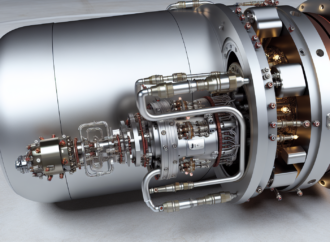
The Fusion Propulsion System represents a revolutionary advancement in space travel, promising to transform humanity’s ability to explore the cosmos. This innovative technology aims to harness the same nuclear fusion reactions that power the sun, enabling spacecraft to reach remarkable speeds and significantly reducing travel times to distant destinations. For instance, a mission to Mars could potentially be completed in weeks rather than months, vastly improving the feasibility of interplanetary exploration.
The core mechanism of the Fusion Propulsion System involves the fusion of light atomic nuclei, which releases immense energy. This process distinguishes it from traditional chemical rockets, offering a cleaner and more efficient means of propulsion. Central to the system’s operation is the creation and control of plasma, which is directed to produce thrust, propelling spacecraft at unprecedented velocities.
The implications of this technology extend far beyond mere speed; it could unlock the mysteries of our solar system and facilitate deeper space exploration. The Fusion Propulsion System is not merely a theoretical concept but a glimpse into a future where human ingenuity and advanced science converge to make the exploration of the stars a tangible reality. As we stand on the brink of this potential leap into the unknown, the call of the stars beckons humanity to embrace this next frontier in space travel.
READ MOREAn 11-year-old girl undergoes a historic dual organ transplant, marking a new milestone in pediatric surgery.
READ MORE
Explore the transformative impacts of GRAPITE chip technology on Asia’s tech landscape.
READ MOREA breakthrough in RNA nanotechnology: exploring the cryo-EM structure of RNA nanocages.
READ MORE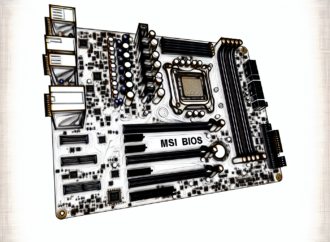
MSI BIOS is the Basic Input/Output System created by Micro-Star International for its motherboards, functioning as essential firmware during a computer’s boot process. This system initializes and tests hardware components to ensure they are operational before the operating system loads. MSI BIOS offers a range of low-level routines that facilitate data transfer between the operating system and various peripheral devices, ensuring efficient communication and functionality.
Among its notable features, MSI BIOS provides system configuration settings that allow users to tailor their hardware settings to meet specific performance needs. It includes hardware monitoring capabilities that help users keep track of system health and performance metrics. Additionally, the BIOS offers overclocking options, enabling users to push their hardware beyond standard specifications for enhanced performance.
Furthermore, MSI BIOS supports UEFI (Unified Extensible Firmware Interface), which significantly improves the booting experience by providing faster startup times and better support for larger hard drives. UEFI also enhances system security and compatibility with modern operating systems, making it a crucial component for users looking to optimize their computing experience. Overall, MSI BIOS is designed to empower users with control over their system’s performance and stability.
READ MOREMaecenas mauris elementum, est morbi interdum cursus at elite imperdiet libero. Proin odios dapibus integer an nulla augue pharetra cursus.
Address
Rajamahavihara Mawatha,
Maharagama 10280, Sri Lanka
Phone: +94 716855379
Fax: 1-800-64-39